

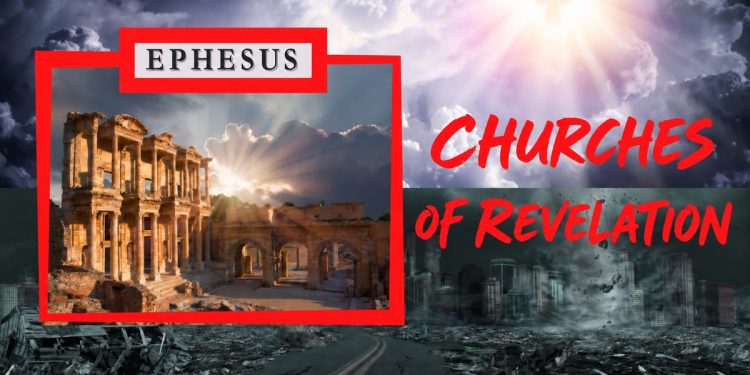
History of the City
Ephesus was the magnificent capital of Ionia, a Greek colony from the 11th century BC; in Roman times it was the capital city of the “province of Asia,” the residence of the proconsul. The city lay on the western coast of Asia Minor, at the mouth of the Cayster River (today the Küçük Menderes) as it flows into the Aegean Sea.
The city was the commercial center of a wealthy coastal province, a hub of learning, culture and art, and a center of pagan cults, idolatry, sacred prostitution and debauchery. The city stood at the crossroads of three trade routes. The first led to the Euphrates through Colossae and Laodicea, securing trade with the markets of the Orient. The second route led from Galatia and enabled trade with the markets of Asia Minor. The third route connected Ephesus with the south, thanks to its position on the Meander and its access to the sea. It was not without reason, then, that Ephesus was called “the ancient marketplace of vanity.” It had a population of 225,000. In Hellenistic times Ephesus experienced a period of exceptional prosperity, celebrated as the richest and most beautiful city of the province.
Beyond its political and commercial standing, the city owed its wide fame to the celebrated Artemision — the center of the cult of Artemis of Ephesus (Lat. Diana), dating from the mid-6th century BC (cf. Acts 19:27-28). It was a monument of Greek architecture, universally regarded as one of the seven wonders of the world! Inside the temple stood a colossal statue of Artemis, goddess of fertility and harvest. The inhabitants of Ephesus believed that her image had fallen from the sky (Acts 19:35), and called her the “mother goddess.” The main festivities in her honor took place in May. The temple building was destroyed by fire and by invasion on numerous occasions. The third and most devastating fire was set by Herostratus, a fame-hungry shoemaker, in 356 BC, on the night Alexander the Great was born. The temple’s reconstruction was carried out by order of Alexander the Great. This famous monument survived into Christian times.
On the temple grounds there were hundreds of priests — eunuchs — and thousands of priestesses engaged in sacred prostitution. The temple held the right of asylum, and letters of mysterious content were issued there, functioning as amulets promising success at the games, protection from drowning, death in war, and so on. On the temple grounds stood one of the first banks in the world. Ephesus was a city of wicked people. It is said that one of the Ionian natural philosophers, Heraclitus (who lived around 540-480 BC), never smiled, because he came from Ephesus.
Ephesus had other precious monuments of Greek architecture as well. The largest marble amphitheater known in antiquity held 25,000 spectators (cf. Acts 19:29,31). Also well known was the Odeon, a concert hall for 1,400 listeners. Then there was the Agora, surrounded by a magnificent colonnade — the city marketplace, where literally everything was bought and sold, above all silver statuettes of Artemis (Acts 19:24). There was also a temple of Serapis, a temple of Hadrian, one of Demetrius, and many other centers of pagan cult. Furthermore, most of the city’s inhabitants were given over to sorcery (cf. Acts 19:13-19).
Yet a twilight fell upon this great and thoroughly immoral city, bringing an end to both its fame and its existence. Two causes contributed to this.
Every year the Cayster River carried down sand and silt and clogged up the great harbor of Ephesus, meaning the harbor had to be dredged frequently. For example, in the days of the apostle Paul, sea traffic had already been shifted from Ephesus to Miletus (cf. Acts 20:15-17). In time, the harbor of Ephesus became so silted up and useless that it was abandoned for good, and all ships were directed to the neighboring port of Smyrna.
Although the city kept expanding further and further from the coast, the ground was marshy and boggy. Diseases and epidemics spread, especially malaria; the city declined, was rapidly depopulated, and only the marshland kept growing ever wider. Only the hardiest of the once-famous city’s inhabitants built a small settlement on the slope of a mountain a few kilometers from the coast. Eventually the city collapsed into ruin, brought down by an earthquake that struck the region. Of the former splendor of the famous city, only a small settlement remains, called Selçuk, about 9 km from the ruins of ancient Ephesus. Archaeological work has been underway there since 1866. Among the ruins, excavators have uncovered the temple of Hadrian, the Arcadian Way, the Agora, the Amphitheater, and the Basilica of St. John, built by the emperor Justinian in the 6th century on the site of the tomb of the oldest of the apostles — the author of the Apocalypse. Another site that continues to draw the unflagging interest of tourists is a small house-chapel called by the locals Panaya Kapulu, built on the spot where Mary, the mother of the Lord Jesus, is believed to have spent the last years of her life (cf. John 19:26-27).
Ephesus is one of the best-preserved architectural complexes of antiquity, and although the city itself was never subjected to extensive destruction, it did fall victim… to mosquitoes. The beautiful Fountain of Trajan no longer has any water, the Greek beauties have vanished from the Baths of Scholastica, and of the temple of Hadrian only the outer façade remains — and yet, for the tourist, Ephesus still remains a great ancient adventure.
The Church in Ephesus
The church in Ephesus was a Christian apostolic metropolis within Asia Minor. After Jerusalem and Syrian Antioch, Ephesus played an outstanding role in the Christianity of the first centuries.
There were three Christian metropolises (apostolic churches):
- Jerusalem – the metropolis of apostolic Christianity. The church was founded around the year 30 (Acts 2)
- Syrian Antioch – the metropolis of missionary Christianity, the church founded around the year 43 (Acts 11 and 13)
- Ephesus – the metropolis of later Christianity. The church founded around the year 54 (Acts 18 and 19)
The apostle Paul, during his third missionary journey, stayed in Ephesus in the years 53-57, and accomplished one of the greatest works of his life (Acts 18:18-20:38). As a result of his testimony and his labor lasting more than 3 years (Acts 20:31), such a great number of people turned to Christ that the church in Ephesus became one of the most well-known churches in the world (Eph 1:15). Here the Lord Jesus Christ performed many miracles and healings through Paul (Acts 19:11-13).
The church in Ephesus was raised up and led by great pastors and teachers. The first of them was the apostle Paul (Acts 20:18), the second — Priscilla and Aquila (Acts 18:18-19), the third — Apollos (Acts 18:24-28), the fourth — Timothy (around the year 66 – 1 Tim 1:3), the fifth — Tychicus (Eph 6:21; 2 Tim 4:12), the sixth — Trophimus (Acts 20:4; 21:29), and the seventh — John. He settled here around AD 70 (shortly before the destruction of Jerusalem) and remained until his exile to the island of Patmos (AD 95), and after his exile he returned once again to Ephesus, where he spent the last years of his life. He died around AD 104.
Probably more than half of the books of the New Testament either originate from Ephesus or have some connection with it. In Ephesus, too, the third council of the Church was held, in the year 431, at which Nestorius was condemned and it was affirmed that Mary, the mother of Jesus, had lived, died and was buried there. And it was here, somewhat later, that the cult of Mary had its origin — a cult that forms part of the teaching of the Roman church.
This church, developing so magnificently, received a serious warning after 40 years of existence, however:
“Nevertheless I have somewhat against thee, because thou hast left thy first love. Remember therefore from whence thou art fallen, and repent, and do the first works; or else I will come unto thee quickly, and will remove thy candlestick out of his place, except thou repent.” – Rev 2:4-5
In the 40s of the 7th century, Asia Minor, and so Ephesus as well, was overrun by a wave of Mohammedanism. In this way, western Asia, the cradle of Gentile-Christianity, embraced Islam. Muhammad appeared at a time when the church had fallen into a process of paganization and idolatry. Islam, in a certain sense, was a revolt against the idolatry of the “Christian world.” It was “God’s scourge” upon a corrupted church. The Muslims completely wiped out all traces of Christianity in Palestine and Asia Minor.
Today, all that remains of the Christian metropolis in Ephesus is a blank spot. The Lord Jesus Christ, just as He had warned, removed the candlestick. As a result, not only did the church cease to exist, but so did the entire city. The sovereign God, in the Lord Jesus Christ, thereby relentlessly judged pagan idolatry and Christian lukewarmness. A great warning! (Gal 6:7; Heb 10:31).
The Letter to the Church in Ephesus (Rev 2:17)
Against this broad historical background, it becomes easier to grasp the depth of the message the Lord Jesus Christ gives in the letter to the church in Ephesus. The meaning of the word “Ephesus” is unclear.
The word Ephesus has various meanings: weakening, loosening, or striving, longing, or overseer, guardian, leader, ruler
At the beginning of this letter we find its addressee: “unto the angel of the church of Ephesus write…” The whole book was directed to the angel of the church, who in turn passed on to others the content of “the things which must shortly come to pass.”
There are two interpretations of the Greek term used in the text, angelos (messenger, angel):
- The messenger of the church. This could have been a messenger of that church, in contact with the apostle John, who was in exile on the island of Patmos, carrying word back to the church. Each church could have had such a messenger.
- The leader of the church. These were the brothers ministering the Word, the so-called elders (1 Tim 5:17; 1 Pet 5:1). The elders cared for a given congregation.
Next, the Lord Jesus introduces Himself as the author of the letter:
“These things saith he that holdeth the seven stars in his right hand” – Rev 2:1
According to Jesus’ own explanation in Rev 1:20, the stars are the angels of the churches. The task of the stars is to shine (Gen 1:14-17). They serve as a point of orientation for ships at sea (cf. Acts 27:20) heading toward the proper harbor. The Lord Jesus says that the angels of the churches (elders, pastors, evangelists, teachers, apostles, prophets…) can only point the right way to the Eternal Harbor, on the boundless sea of life, when they are found in the right hand of the Lord Jesus Christ. To such angels a wonderful promise is granted:
“And they that be wise shall shine as the brightness of the firmament; and they that turn many to righteousness as the stars for ever and ever.” – Dan 12:3
Further on, the Lord Jesus says:
“who walketh in the midst of the seven golden candlesticks” – Rev 2:1
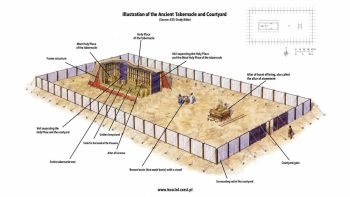
Jesus Christ is Lord and Head of the Church (Eph 1:22; Col 1:18). He is the heavenly Administrator of the church, the High Priest walking among the seven candlesticks. This image corresponds perfectly to the image of the seven-branched lampstand in the Old Testament Tent of Meeting (cf. Exod 25:31-40; 37:17-24). This lampstand illuminated the objects found in the Holy Place, and above all the person of the High Priest. He would pour in oil for the lamps, trim the wicks, and stop the lampstand from smoking. So the most important task of the church — the New Testament lampstand — is to cast a clear and unmistakable light on the person of the Great High Priest, Jesus Christ (Heb 4:14; 8:1). During His earthly ministry, He said to His disciples:
“Ye are the light of the world. A city that is set on an hill cannot be hid. Neither do men light a candle, and put it under a bushel, but on a candlestick; and it giveth light unto all that are in the house. Let your light so shine before men, that they may see your good works, and glorify your Father which is in heaven.” – Matt 5:14-16
And the apostle Paul repeated it:
“That ye may be blameless and harmless, the sons of God, without rebuke, in the midst of a crooked and perverse nation, among whom ye shine as lights in the world” – Phil 2:15
The improper light of the church was the main reason the Lord Jesus Christ threatened to remove the lampstand from the church in Ephesus (2:5). Outwardly, all was well, but the lampstand had stopped casting clear light on the Person of Jesus Christ.
It made no difference to God that this was one of the 3 greatest churches in the world, with the greatest influence, where the greatest teachers and apostles of that time preached and resided. What mattered was only whether it was fulfilling its role in the city or not.
The Church’s Strengths
The Lord Jesus, however, first lists the church’s strengths, offering praise and recognition: “I know thy works, and thy labour, and thy patience.” He mentions patience twice (v. 2 and 3), speaking of victorious sufferings, whose coming the apostle Paul had foretold:
“For I know this, that after my departing shall grievous wolves enter in among you, not sparing the flock. Also of your own selves shall men arise, speaking perverse things, to draw away disciples after them.” – Acts 20:29-30
The Lord Jesus always begins with encouragement, and only afterward speaks of what needs to change.
The Church’s Weaknesses
One might rejoice in such positive traits and strengths of the church, but God sees everything in its true light — He sees from within, and knows the motives behind our actions. After 40 years of existence, the church in Ephesus had lost much of its initial power, love and faith. The Lord Jesus Christ clearly names only these positive, outward features of the church’s activity, but the inward ones had vanished.
For comparison, let me cite the condition of the exemplary church in Thessalonica, as described by the apostle Paul:
“Remembering without ceasing your work of faith, and labour of love, and patience of hope in our Lord Jesus Christ, in the sight of God and our Father” – 1 Thess 1:3
In Ephesus there were only deeds, labor and patience — while Faith, Hope and Love had vanished. So the lampstand had stopped shining, and only rituals remained. The Lord Jesus calls this condition the loss of first love. It was the first stage of the church’s departure from Christ. The Lord Jesus Himself, in the Gospels, gives the two greatest commandments, and both are tied to love — love for God and love for people. Nothing is more important than this!
How did this happen?
How did it happen that, within a mere 40 years (one generation) from the founding of the church to the writing of Revelation, such an incredible spiritual indifference set in among Christians — appearing in the dangerous form of a superficial piety and Pharisaic formalism? And yet this was reality.
It’s worth recalling here a certain detail from the history of the city, which was perhaps Ephesus’s greatest enemy of all — the Cayster River, which ceaselessly carried down large quantities of mud, silt and debris, turning what was once the greatest and most famous harbor of Anatolia into a shoal, a bog, a marshland. The material deposited by the Cayster River extended the valley by roughly 5.0 km compared to the position of the coastline in the days when the ancient city flourished.
The Teaching of the Nicolaitans
Here we arrive at some serious conclusions. The spiritual life of the congregation in Ephesus had become so contaminated by various worldly, pagan-philosophical influences that, instead of being an accessible, genuine harbor for souls battered by sin, it became silted up with the impurities of this world and its teaching. One such “spiritual shoal,” the Lord Jesus Christ names as “the deeds of the Nicolaitans” (v. 6). Who were the Nicolaitans? There are various interpretations of this:
- Followers of the sect of Nicolas, a proselyte from Antioch, one of the seven deacons (Acts 6:5), who taught, in an unbiblical way, about the freedom of the human will (cf. 1 Cor 6:12; 8:9; 10:23; Gal 5:1; 5:13). The Nicolaitans taught that the most important thing was to be converted, and that everything else — such as living a pure Christian life — didn’t matter (Eph 5:5; 2 Tim 3:4-6; Titus 1:16).
- To rule over the people. The second interpretation (W. Barclay) is based on the etymology of the term “Nicolaitans.” The Greek term Nikolaos consists of two parts: nikao — to conquer, rule, and laos — people, and it means “to rule over the people.” So the Nicolaitans were forerunners of clericalism and episcopalism — that is, of the first hierarchy of clergy who, in their view, ought to rule over the church and govern the people within it. Yet the Lord Jesus firmly states that He “hates the deeds of the Nicolaitans.” That’s why, elsewhere in the Bible, the Holy Spirit wrote through the apostle Peter to believers, among others, in Asia (Ephesus being its capital — cf. 1 Pet 1:1):
“The elders which are among you I exhort, who am also an elder, and a witness of the sufferings of Christ, and also a partaker of the glory that shall be revealed: Feed the flock of God which is among you, taking the oversight thereof, not by constraint, but willingly; not for filthy lucre, but of a ready mind; Neither as being lords over God’s heritage, but being ensamples to the flock. And when the chief Shepherd shall appear, ye shall receive a crown of glory that fadeth not away.” – 1 Pet 5:1-4
- Clergy and laity. The third interpretation (Dr. C. I. Scofield) is similar to the previous one. It holds that the Church, modeling itself (wrongly, in fact) on the pattern by which the people of Israel functioned in the Old Testament (the priestly offices of the tribe of Levi), ought to divide itself into clergy and laity — that is, into clergy exercising authority and ministry within the church, and laity subordinated apodictically and unconditionally to the jurisdiction of the priesthood (nikao also means to prevail over someone). This stands in complete conflict with the teaching of the Lord Jesus:
“But be not ye called Rabbi: for one is your Master, even Christ; and all ye are brethren.” – Matt 23:8
The teaching of the Nicolaitans, introducing a division between clergy and laity, eventually led to the rise of the institution of the papacy (cf. Matt 23:9).
In the third letter, to the church in Pergamos, these “deeds of the Nicolaitans” develop further and begin to function as “the doctrine of the Nicolaitans (cf. 2:15),” apparently propped up with fragments torn out of the Bible.
The Lord Jesus directs words of admonition, and says:
- Remember from where you have fallen – this refers back to the church’s past
- Repent – we constantly need to correct our course with God
- Do the first works – return to your first love!
The church in Ephesus lost its identity: by abandoning its first love, its members stepped onto dangerous ground, since love and faith should be the source of a believer’s works!
The Promise
At the end, the Lord Jesus leaves the church in Ephesus with a promise and an encouragement for those who overcome — the Tree of Life. The victorious portion of the church in Ephesus will eat from the tree of life in the garden of Eden, in Paradise. The garden of Eden calls to mind walking with God in an intimate relationship, full of love. This is the very opposite of what the church in Ephesus was struggling with. This is exactly the place where we should be in our relationship with God.