

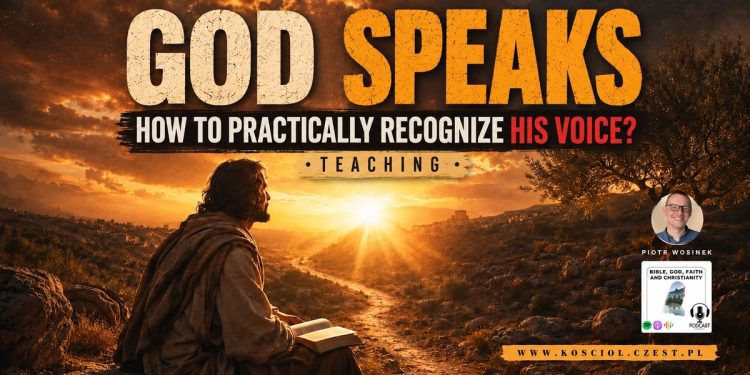
God speaks many times and in many ways
The Bible itself says that God spoke “at many times and in many ways.” This variety is therefore biblical. But the Letter to the Hebrews also shows a hierarchy: the fullest revelation of God is the Son—Jesus Christ.
Watch on YouTube
Listen to the Podcast
Long ago, at many times and in many ways, God spoke to our fathers by the prophets, but in these last days he has spoken to us by his Son, whom he appointed the heir of all things, through whom also he created the world.
Hebrews 1:1-2
God is a Father who speaks!
I don’t know if you’ve seen videos online showing how sheep listen to and recognize the voice of their shepherd. It’s remarkable how sheep respond only to his voice. In the same way, as we spend time with our Chief Shepherd and His Word, we come to know His voice and are able to tell it apart from other voices.
My sheep hear my voice, and I know them, and they follow me.
John 10:27
Christianity is not the religion of a silent God. The God of the Bible is a God of relationship.
Through His WORD, which speaks, He creates, reveals Himself, calls people, corrects, comforts, and leads through the Holy Spirit. From the very beginning God speaks with man:
- In Eden, God calls out to Adam.
- To Noah He speaks in a time of judgment and salvation.
- To Abraham He speaks of departure, promise, and covenant.
- To Moses He speaks from the bush and leads Israel.
- To the prophets comes “the word of the Lord.”
- In the Gospels the Father speaks through the Son.
- In the Acts of the Apostles the Holy Spirit leads the Church.
Many people carry within them an image of a God who is distant, cold, and silent. Yet Jesus reveals a Father who knows His children and leads them. If you are a child of God, the leading of the Holy Spirit is not a luxury for the chosen few. It is part of normal life with the Father.
For all who are led by the Spirit of God are sons of God.
Romans 8:14
First, the Word—God’s primary language
Before we talk about dreams, visions, inner promptings, and prophetic guidance, we need to lay a foundation. The surest way in which God speaks is His Word.
If someone says, “God told me,” but it contradicts the Word, the character of Jesus, or the fruit of the Spirit, then it was not God. The Holy Spirit does not contradict the Scripture He Himself inspired! Without this foundation, it is easy to mistake our own desires, fears, or religious imaginings for the voice of God.
All Scripture is breathed out by God and profitable for teaching, for reproof, for correction, and for training in righteousness, that the man of God may be complete, equipped for every good work.
2 Timothy 3:16-17
Do you want to hear GOD? Start reading the Bible!
You will not learn to recognize the voice of God well if you do not know the character of God revealed in the Word.
Your word is a lamp to my feet and a light to my path.
Psalm 119:105
How did God speak throughout the whole Bible?
The table below is not meant to be a neatly ordered map of every biblical way God communicates. It helps show that God really did speak in different ways, but always in keeping with His character. God spoke in different ways, but never chaotically. He has many ways of speaking, but one character—most fully revealed in Jesus Christ.
| Way God speaks | To whom? | Period / Testament | Examples | What does it show? |
| A direct, audible voice of God | Adam, Noah, Abraham, Moses, Samuel, Jesus at His baptism and transfiguration | Old Testament and the Gospels | Genesis 3:9; Genesis 12:1; Exodus 3:4; 1 Samuel 3:10; Matthew 3:17 | God is able to address a person specifically and directly! |
| Dreams | Abimelech, Jacob, Joseph, Pharaoh, Nebuchadnezzar, Joseph the husband of Mary | Old and New Testament | Genesis 20:3; Genesis 28:12; Genesis 37; Daniel 2; Matthew 1:20 | God can speak through images and symbols, even while a person is asleep. |
| Visions | Abraham, Ezekiel, Daniel, Zechariah, Peter, Paul, John | Old and New Testament | Genesis 15:1; Ezekiel 1; Daniel 7; Acts 10; Acts 16:9; Revelation 1 | Visions often unveil spiritual reality, direction, or future events. |
| Angels | Hagar, Lot, Gideon, Daniel, Mary, Joseph, the shepherds, Peter | Old and New Testament | Genesis 16:7; Judges 6:12; Daniel 9:21-23; Luke 1:26; Acts 12:7 | God may send messengers, but the center always remains God, not the angels. |
| Prophets | Israel, kings, nations, the Church | Mostly Old Testament, but also New Testament | Isaiah; Jeremiah; Ezekiel; Acts 11:28; Acts 21:10-11 | God speaks through people, and a prophetic word requires discernment. |
| The Law and Scripture | Israel, kings, the people of God, the Church | Old and New Testament | Deuteronomy 6; Psalm 119; Matthew 4:4; 2 Timothy 3:16 | The Word is the objective foundation for discernment. |
| Wisdom and counsel | Joseph, Solomon, Daniel, the apostles, the elders | Old and New Testament | Genesis 41; 1 Kings 3; Daniel 2; Acts 15 | God does not lead only spectacularly. Sometimes He speaks through wisdom and shared discernment. |
| Signs and wonders | Moses, Israel, Elijah, Elisha, Jesus, the apostles | Old and New Testament | Exodus 4; 1 Kings 18; the Gospels; Acts 3 | Signs confirm God’s message, but signs alone do not replace obedience to the Word. |
| Jesus Christ—the Son of God | The disciples, Israel, the world | New Testament | John 1:14; John 14:9; Hebrews 1:1-2 | Jesus is the fullest revelation of the Father. Every “voice” must be measured against the character of Jesus. |
| The Holy Spirit | Jesus, the apostles, the Church, believers | New Testament | John 16:13; Acts 13:2; Acts 16:6-7; Romans 8:14 | In the New Covenant God leads His children from within through the Spirit. We are the temple! |
| Inner witness and peace | Believers | New Testament | Romans 8:16; Colossians 3:15 | The Holy Spirit bears witness in our spirit, and the peace of Christ can serve as an inner confirmation. |
| The body of Christ and mature counsel | The Church, disciples, leaders, the community | New Testament | Acts 15; Ephesians 4:11-16; 1 Corinthians 14:29 | God also speaks through community, correction, gifts, and mature discernment. |
The most common ways God speaks
| Frequency in the biblical narrative | Way | Teaching note |
| Very often | The word of the Lord through the prophets and Scripture | The public revelation of God’s will, correction, promises, and warnings. |
| Often | God speaking directly at key moments | Calling, covenant, guidance, breakthrough, confirmation of identity. |
| Often | Dreams and visions | Especially at times of breakthrough, warning, or revelation of the future or of direction. |
| Often | Angels | Important interventions, announcements, protection, and delivering specific instructions. |
| Central in the New Testament | Jesus Christ | The fullest revelation of the Father. There is no higher revelation than the Son. |
| Normal in the New Covenant | The Holy Spirit | Leads God’s children, reminds them of Jesus’ words, bears witness, distributes gifts. |
| Daily and practical | Word, peace, wisdom, community, the fruit of the Spirit | These are the ways of discerning God’s guidance in everyday life. |
The Holy Spirit dwells in believers
In the Old Covenant God often spoke to people through chosen individuals. In the New Testament God still speaks, but the Holy Spirit dwells in believers and leads them from within.
When the Spirit of truth comes, he will guide you into all the truth. He will not speak on his own authority, but whatever he hears he will speak, and he will declare to you the things that are to come.
John 16:13
The Spirit himself bears witness with our spirit that we are children of God.
Romans 8:16
Let the peace of Christ rule in your hearts, to which indeed you were called in one body. And be thankful.
Colossians 3:15
One of the greatest differences between the Old and New Covenants is that God does not merely speak to a person from the outside, but dwells within believers through the Holy Spirit.
In the Old Testament, the Spirit of God came upon chosen individuals for specific tasks: prophets, kings, judges, craftsmen, leaders.
In the New Covenant, every born-again believer becomes a temple of the Holy Spirit. This does not mean we no longer need Scripture, community, and discernment. On the contrary, since the Spirit dwells in us, we need all the more to learn to recognize His witness in agreement with the Word.
How do you tell God’s voice from your own thoughts?
The point is not to be afraid of every prophecy, but also not to uncritically believe every thought. We are learning to discern.
Beloved, do not believe every spirit, but test the spirits to see whether they are from God, for many false prophets have gone out into the world.
1 John 4:1
Solid food is for the mature, for those who have their powers of discernment trained by constant practice to distinguish good from evil.
Hebrews 5:14
7 Pillars of Discernment
It is hardest to recognize God’s voice when we really want Him to say what we have already decided for ourselves.
| Question of discernment | Why does it matter? |
| Is this in agreement with the Word of God? | God does not contradict Himself. The Holy Spirit does not lead against Scripture. |
| Does this fit the character of Jesus? | Jesus is the fullest revelation of the Father. |
| Does this bear the fruit of the Spirit? | God’s voice leads to life, love, peace, truth, and holiness. |
| Does this bring peace, and not fear and compulsion? | God’s peace does not mean the absence of difficulty, but it is a deep witness of guidance. |
| Does this build up love, or feed the ego? | God’s voice does not feed pride, revenge, manipulation, or control. |
| Can I submit this to mature discernment? | True guidance is not afraid of light and wise correction. |
| Am I willing to obey, even if God says something different from what I want? | Sometimes we do not hear, because we have already decided what we want to hear. |
The voice of God, the voice of the flesh, and the voice of the enemy
Not every thought that appears in your head is your own. And not every spiritual-sounding thought comes from God.
| The voice of God | The voice of the flesh | The voice of the enemy |
| Leads to truth. | Seeks comfort and instant gratification. | Accuses and condemns. |
| Corrects without condemning. | Defends the ego and being right. | Frightens and exaggerates the threat. |
| Brings life, peace, and courage. | Fears the cost of obedience. | Distorts the image of the Father. |
| Leads to Jesus and to obedience. | Runs from the cross, responsibility, and truth. | Leads to isolation, despair, or pride. |
| Builds the fruit of the Spirit. | May seem reasonable, but often feeds the old self. | May sound spiritual, but produces dark fruit. |
But the fruit of the Spirit is love, joy, peace, patience, kindness, goodness, faithfulness, gentleness, self-control; against such things there is no law.
Galatians 5:22-23
Practical exercises for listening to God
1. Read the Word as a conversation, not just information. Ask questions: Father, what are You showing me about Yourself? What are You showing me about myself? What do You want me to do today?
2. Ask God simple questions. You don’t have to start with the big decisions of life. Start with: Holy Spirit, how should I pray for this person? What do You want to show me today?
3. Write down what you hear from God. A journal helps you tell a passing emotion apart from recurring guidance. Over time you will see patterns and fruit.
4. Check everything against the Bible. Even a strong prophecy must pass through the filter of Scripture, the character of Jesus, and the fruit of the Spirit.
5. Submit important matters to mature discernment. For major decisions, don’t build everything on a single feeling. Seek wise counsel and peace.
6. Be obedient in small things. Call someone, apologize, forgive, pray, stop putting off what God has already shown you.
7. Learn by the fruit. After some time, ask: did this bring peace, love, truth, greater closeness to Jesus, and good fruit?
But be doers of the word, and not hearers only, deceiving yourselves.
James 1:22
We learn to hear God not only by listening, but by obeying what we have already heard.
What makes it harder to hear God?
- Noise
- Hurry
- Fear
- Pride
- Disobedience
- Seeking confirmation of a decision you have already made
Sometimes God speaks quietly!
Not every spectacular phenomenon is the voice of God. Elijah experienced wind, an earthquake, and fire, but the Lord revealed Himself in a still, small voice. This teaches us that God’s guidance is not always the loudest.
And he said, “Go out and stand on the mount before the Lord.” And behold, the Lord passed by, and a great and strong wind tore the mountains and broke the rocks in pieces before the Lord, but the Lord was not in the wind. And after the wind an earthquake, but the Lord was not in the earthquake. And after the earthquake a fire, but the Lord was not in the fire. And after the fire the sound of a low whisper. And as soon as Elijah heard it, he wrapped his face in his cloak and went out and stood at the entrance of the cave.
1 Kings 19:11-13
Conclusion and prayer
God is not a silent Father. He spoke throughout the whole Bible and still leads His children. Maturity does not consist in chasing after experiences. Maturity consists in learning to recognize the Father’s voice in the light of Jesus, the Word of God, the fruit of the Spirit, and obedience.
The point is not to label every morning impulse as the voice of God. Nor is it to be afraid of the leading of the Holy Spirit. It is about a relationship:
- The Father speaks.
- The Holy Spirit leads.
- Jesus is the fullest revelation of the Father.
- And the Word of God is a lamp to our feet.
The most important question is not: “Can I tell a spectacular story?” The most important question is: “Am I willing to listen and obey, even when God speaks simply, quietly, and specifically?”
Should my prayer move from monologue to relationship? Do I take time to listen to the Holy Spirit within me? Am I obedient to what God says in His Word?
Closing prayer
Father, we thank You that You are not a distant and silent God. We thank You that You spoke most fully through Your Son, Jesus Christ. We thank You for Your Word and for the Holy Spirit, who dwells in believers, leads us, reminds us of the truth, and bears witness in our spirit that we are Your children.
Teach us to listen. Cleanse our hearts of noise, fear, pride, stubbornness, and the desire for You to merely confirm our own plans. Teach us to recognize Your voice through the Word, peace, wisdom, the fruit of the Spirit, and mature discernment. Give us the humility to test everything, and the courage to obey what You have already shown us.
We don’t want to be hearers only. We want to be doers of Your Word. Lead us as Your children. In the name of Jesus. Amen.
Brief summary
- God is not a silent Father.
- The problem is often not that God isn’t speaking, but that we do NOT recognize His voice. (me and dreams)
- You will not learn God’s voice if you do not know the character of God revealed in the Word.
- The Holy Spirit often does not shout. He testifies, guides, reminds, restrains, and gives peace.
- Not every thought that appears in your head is your own.
- Not every spiritual-sounding thought comes from God.
- It is hardest to recognize God’s voice when we really want Him to say what we have already decided for ourselves.
- Sometimes we are not seeking God’s guidance. We are seeking God’s signature on a decision we have already made.
- Don’t miss the quiet voice of God because you are only waiting for something spectacular.
- We learn to hear God by obeying what we have already heard.
- The greatest proof of listening to God is obedience.