

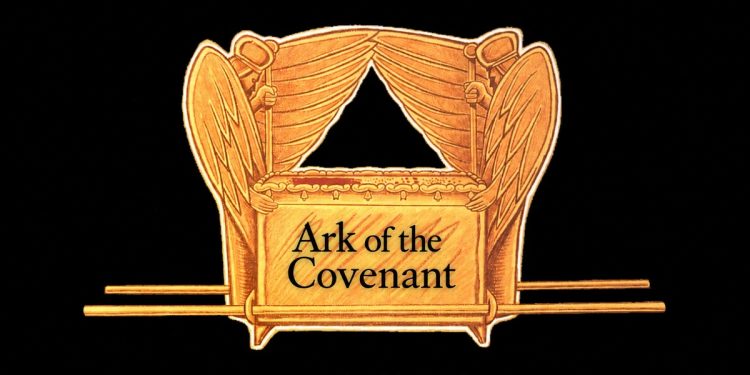
The Ark of the Covenant was sought after by many researchers, and even by Adolf Hitler himself. Ron Wyatt died in 1999 after a long battle with cancer, but his research work — including his research on the Ark of the Covenant — has survived him, so that more people today can admire his discoveries and the evidence for the authenticity of the Bible. His work is being continued by Wyatt Archaeological Research, a non-profit organization based in Tennessee.
A phone interview with Ron was supposed to last only a few minutes because of his very weak condition. In reality, he spoke for half an hour. A few days later, Wyatt succumbed to his illness.
The evidence of the various finds Wyatt spoke about has been discussed by religious leaders, scientists, and laypeople for at least a decade.
It’s time to revisit this greatest of archaeological treasures. Wyatt was able to physically locate the Ark of the Covenant — the original tablets of the Ten Commandments, with the Mercy Seat intact on top. The whole thing was found in a chamber just behind the walls of ancient Jerusalem, about 20 feet (6 meters) below the spot which, according to Wyatt, was the actual site of the crucifixion of Jesus Christ.
Wyatt said he found a crack caused by an earthquake directly beneath the place where the cross stood. As he told WorldNetDaily, it extends down through the rock all the way to the resting place of the Mercy Seat (the Throne of Mercy) on top of the Ark of the Covenant. Christ’s blood could have flowed through this crack after his death, and after his side was pierced by a soldier’s spear.
The crucifixion site appears to have evidence that it was once enclosed within a first-century building, apparently a church. At the site there is a large round stone that fits perfectly into the Garden Tomb — considered by many to be the place from which Christ’s body rose from the dead.
The Bible teaches about the concept of animal sacrifice, symbolizing the actual sacrifice of blood that Christ was to offer. Christ’s act — portrayed by the Apostles as that of the great High Priest, who allowed himself to be sacrificed and placed his blood on the Mercy Seat — was, according to Wyatt’s writings, the great and final act in the process of blood sacrifice.
Wyatt believed that the Ark of the Covenant, along with other sacred objects from the First Temple in Jerusalem, was hidden just before the Babylonians entered the city, about 600 years before the crucifixion of Jesus Christ. To this day, many tunnels remain beneath Jerusalem.
These most sacred objects were protected in a chamber, and the entrance to them was sealed and hidden. “When Christ died, the earth shook. The rock split and separated right beneath His cross, and this crack reached all the way down to the hidden chamber that contained the ‘earthly’ throne of God — the Ark with its place of atonement,” Wyatt explained in one of his research letters.
“After His death, when the centurion thrust his spear into Christ’s side and pierced His spleen, blood and water flowed out, falling through this crack and being sprinkled onto the Mercy Seat.” Wyatt explained that in the ancient temple service, the high priest would sprinkle the blood of the sacrifice onto the Mercy Seat. Wyatt said that Christ, as the great High Priest, was the only one who could physically sprinkle blood onto God’s Throne. It was a great act of God that everything was in the right place at the right time, since at the moment of Jesus’s death an earthquake occurred that allowed Christ to pour out his own blood onto the Mercy Seat in fulfillment of this ancient rite, he explained.
Wyatt claimed he had been authorized to carry out his excavations by the Department of Antiquities, but bureaucrats at that agency insisted that his discoveries be kept secret. He was told that Jewish extremists might view the discovery as a sign that the time had come to rebuild the ancient Temple in Jerusalem. The Muslim Dome of the Rock now stands on the site which, according to Jewish fundamentalists, must one day be destroyed so that a new Jewish temple can be built there. According to Ron Wyatt, this will not happen, because the Jews would then want to return to offering “bloody” sacrifices again, which would contradict God’s plan of salvation for mankind — since Jesus, by his own blood, offered one complete and unrepeatable sacrifice for eternity, thereby redeeming humankind from sin and conquering death. (Hebrews 9:11-12) and (Hebrews 9:28).
Wyatt made a significant portion of his research and findings public, but did not release certain documents and photographs, in order to honor an agreement made with Israeli officials who know about the Ark discovered by Wyatt — which he will reveal in another future film.
If you would like to publish this video on your own channel, please include a note in the description stating that “This footage comes from the Biblijne Skarby channel.”
You can read about this and other discoveries on the official websites: